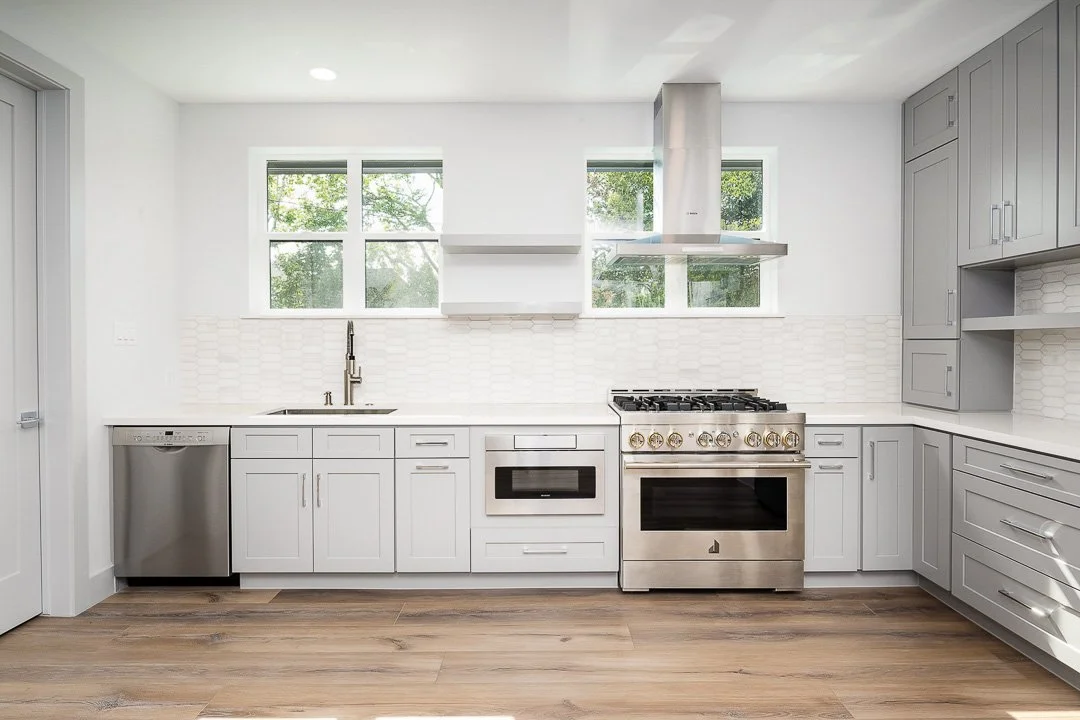
Placing a range hood in front of a window often sparks strong opinions. Homeowners, designers, and architects alike may initially view it as unsafe, impractical, or difficult to maintain. In reality, it’s not about whether the idea is “good” or “bad.” It’s about whether it’s the right decision for a specific project.
In one of our recent projects, we chose this approach intentionally because it was the right solution for the space, the layout, and the way the kitchen would be used.
Understanding How the Kitchen Would Be Used
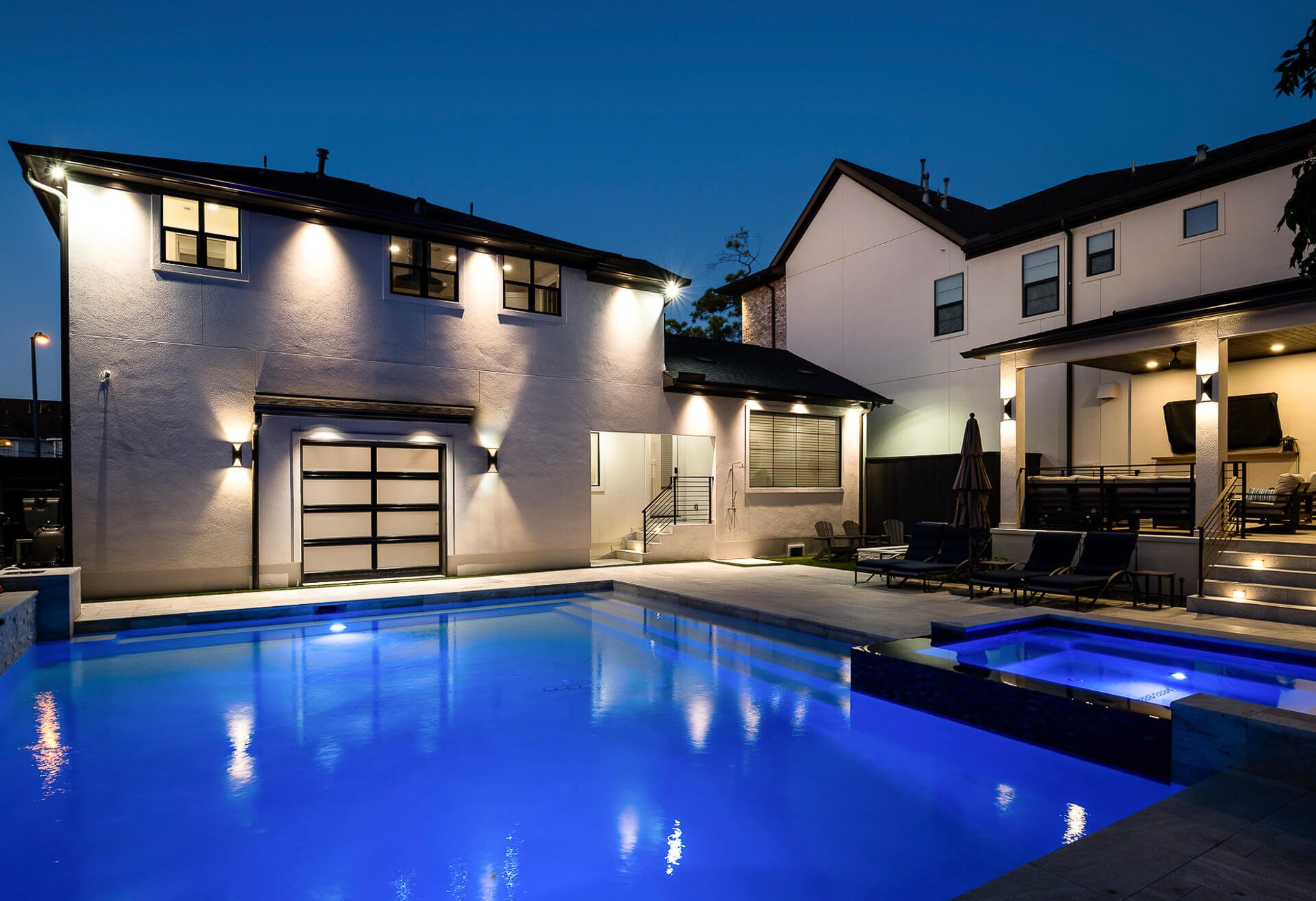
This kitchen is part of a pool house / secondary kitchen, not the main everyday kitchen of the home. That distinction matters.
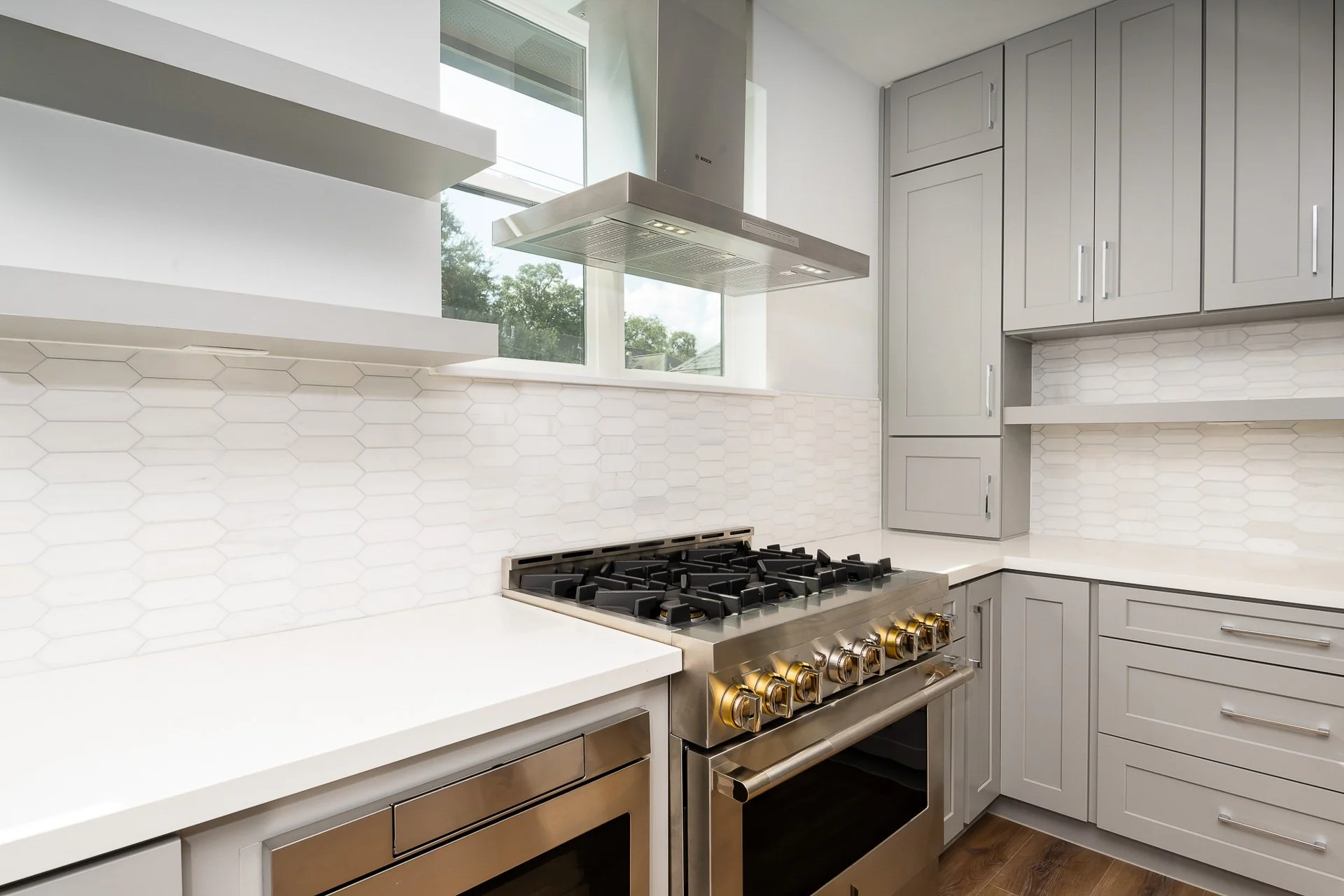
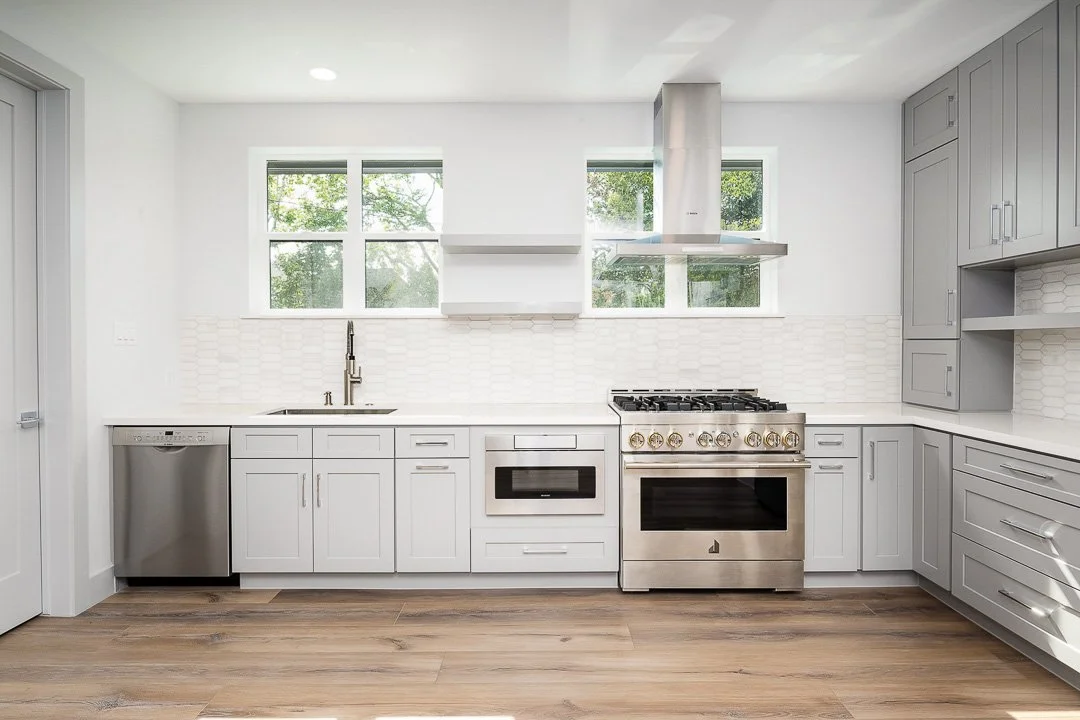
Because it’s not used for heavy, daily cooking, concerns about frequent grease buildup are reduced. Cooking here is more occasional and lighter in nature, which allows for greater flexibility in layout decisions. Ease of cleaning was addressed through material choices, including a backsplash designed to extend higher than usual for simple maintenance.
Understanding how a space will actually be used is one of the most important factors in deciding whether a hood-over-window layout makes sense.
Why the Window Made Sense in This Space
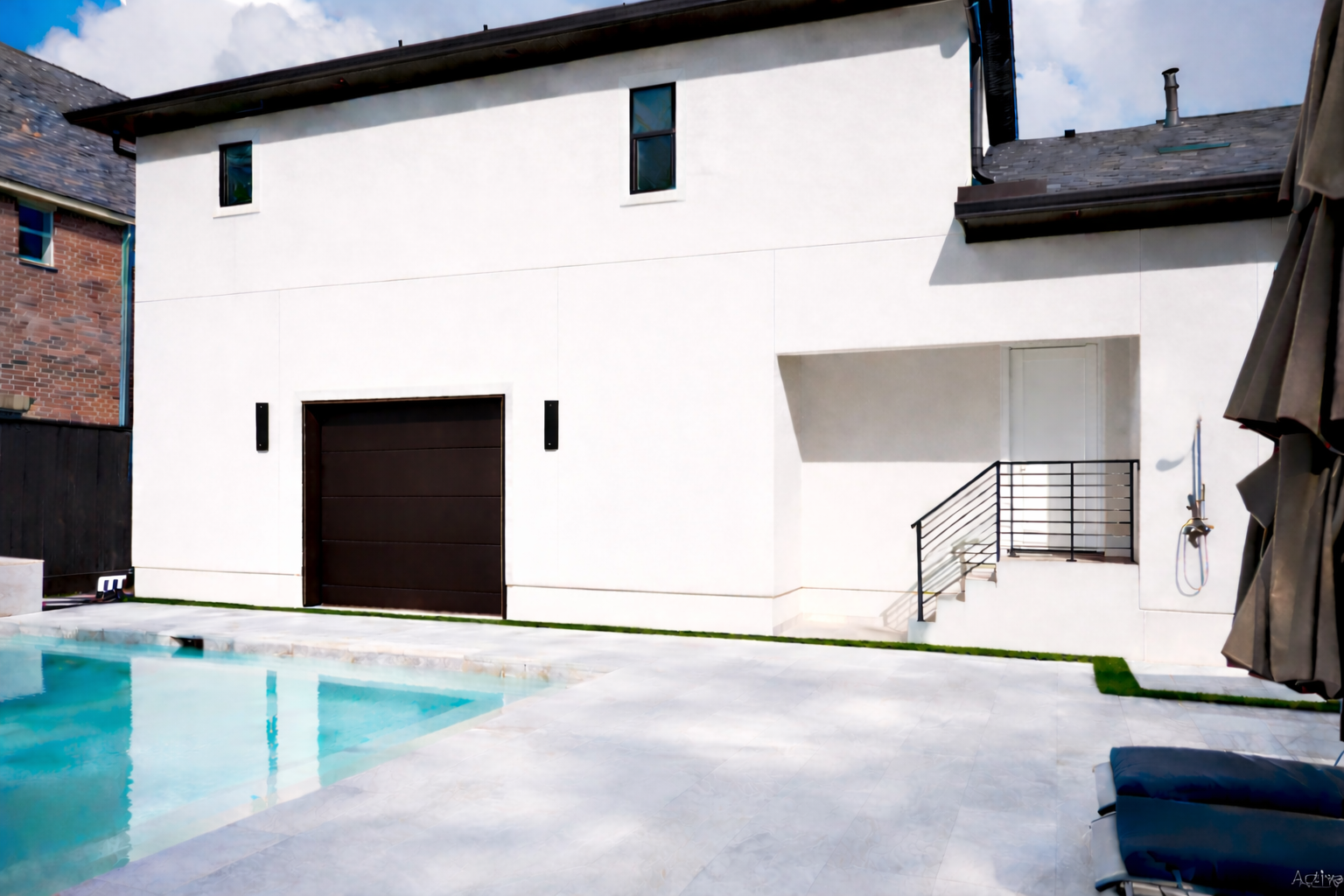
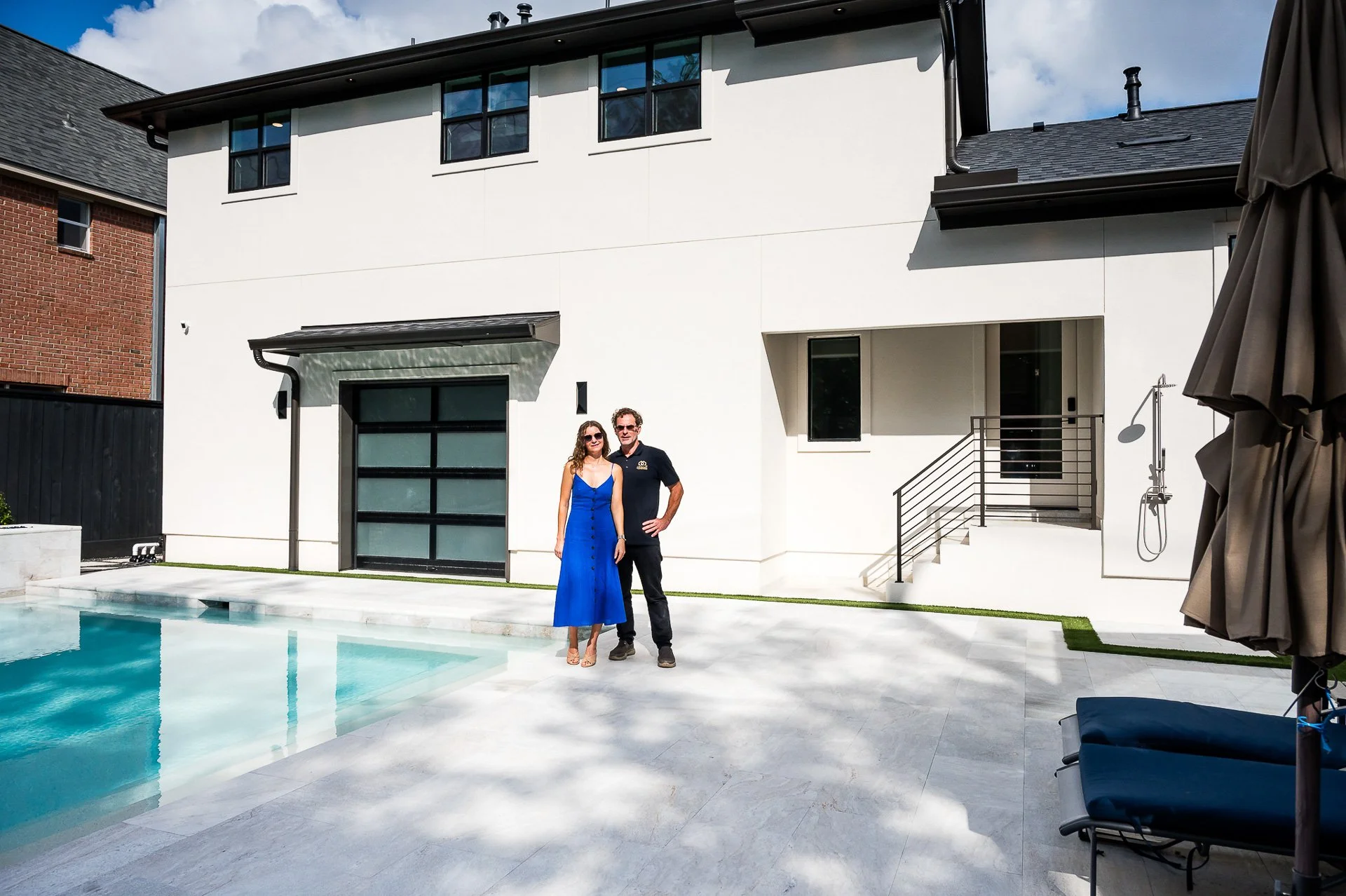
The kitchen wall faces the pool and backyard, making it an important visual element both inside and out. Adding a window at the cooking area allowed us to bring in more natural light and create a stronger connection to the outdoor space.
From the inside, the kitchen feels brighter and more open. From the outside, the elevation feels balanced and intentional instead of closed off. Rather than filling the wall with upper cabinets or leaving it visually heavy, the window allows the space to breathe.
Addressing the Grease Concern
Grease on glass is one of the most common concerns with this layout. In a heavily used, everyday kitchen, this can absolutely be a valid consideration.
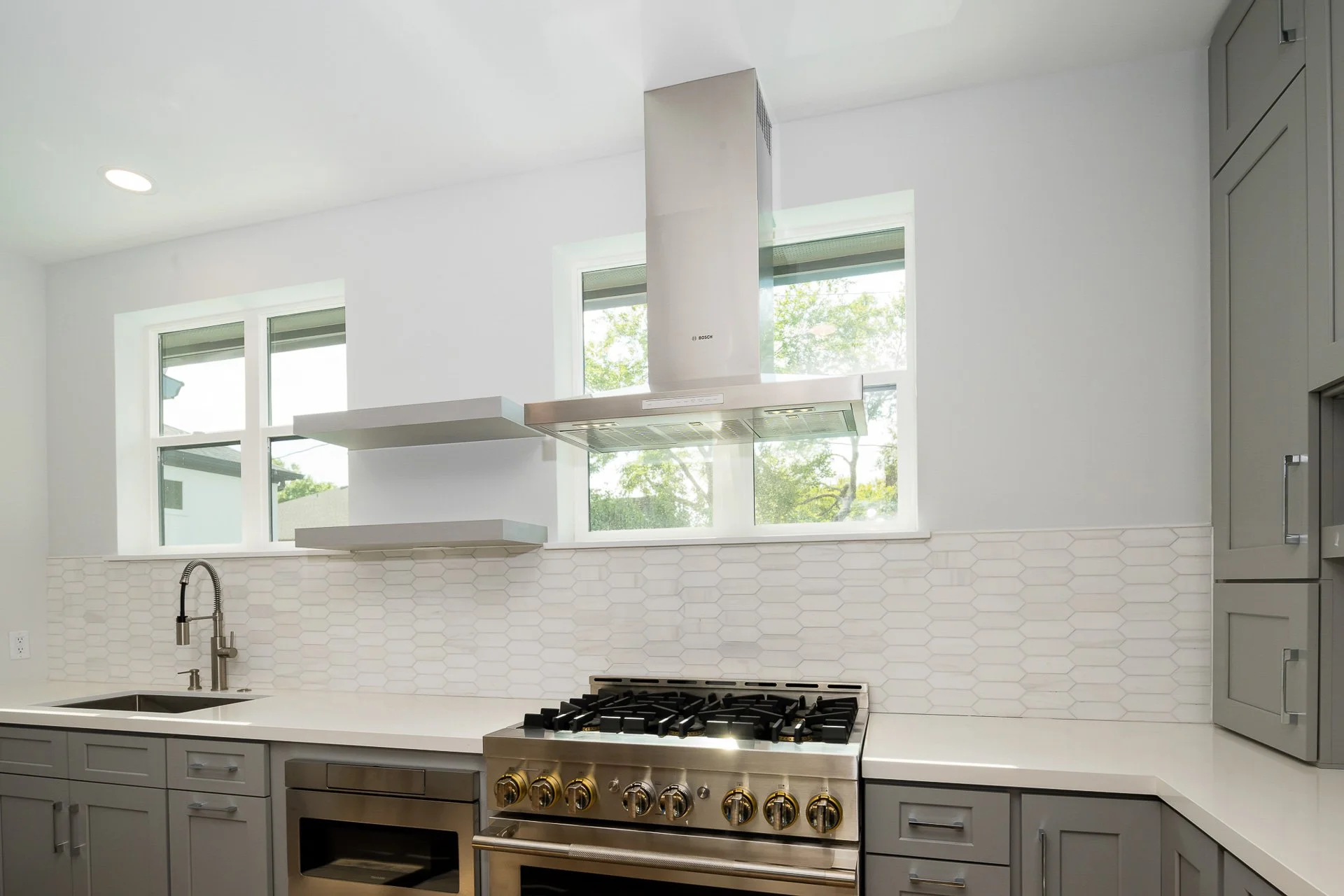
In this project, however, usage is lighter, and maintenance was addressed proactively. The higher backsplash and a properly sized, exterior-vented hood work together to capture cooking byproducts efficiently before they spread. In practice, maintenance here is no more demanding than in many traditional kitchen layouts.
Safety and Smart Planning
Any time a window is placed near a cooking surface, safety must be considered carefully. This includes proper clearances, correct hood height and depth, and the use of tempered safety glass behind the cooktop.
Tempered glass is designed to handle heat and temperature changes more safely than standard glass, which is why it’s commonly used near cooking appliances. While code requirements vary by location, prioritizing safety glass in these situations is a responsible choice.
Equally important is selecting the right hood. A hood in front of a window should be designed for performance, with proper exterior venting and correct sizing for the appliance rather than a decorative or recirculating solution.
Asking the Right Questions Before Deciding
We’re not “for” or “against” a window behind a range hood as a general rule. Instead, we believe the decision should come from asking the right questions early on:
How will this kitchen be used?
Will there be heavy, frequent cooking or occasional use?
How easy will the surfaces be to clean?
How high is the backsplash?
What do local building codes require?
Will the glass be tempered?
What type of hood will be used, and how will it be vented?
When these questions are answered honestly, the right solution usually becomes clear.
Why It Worked in This Project
In this particular kitchen, the hood-over-window layout allowed us to improve natural light, strengthen the connection to the backyard and pool, create a cleaner and more open kitchen design, and fit all desired appliances into a compact space without visual clutter.
The window, hood, backsplash, and ventilation were designed as a coordinated system rather than individual elements. That’s what makes the result feel intentional rather than forced.
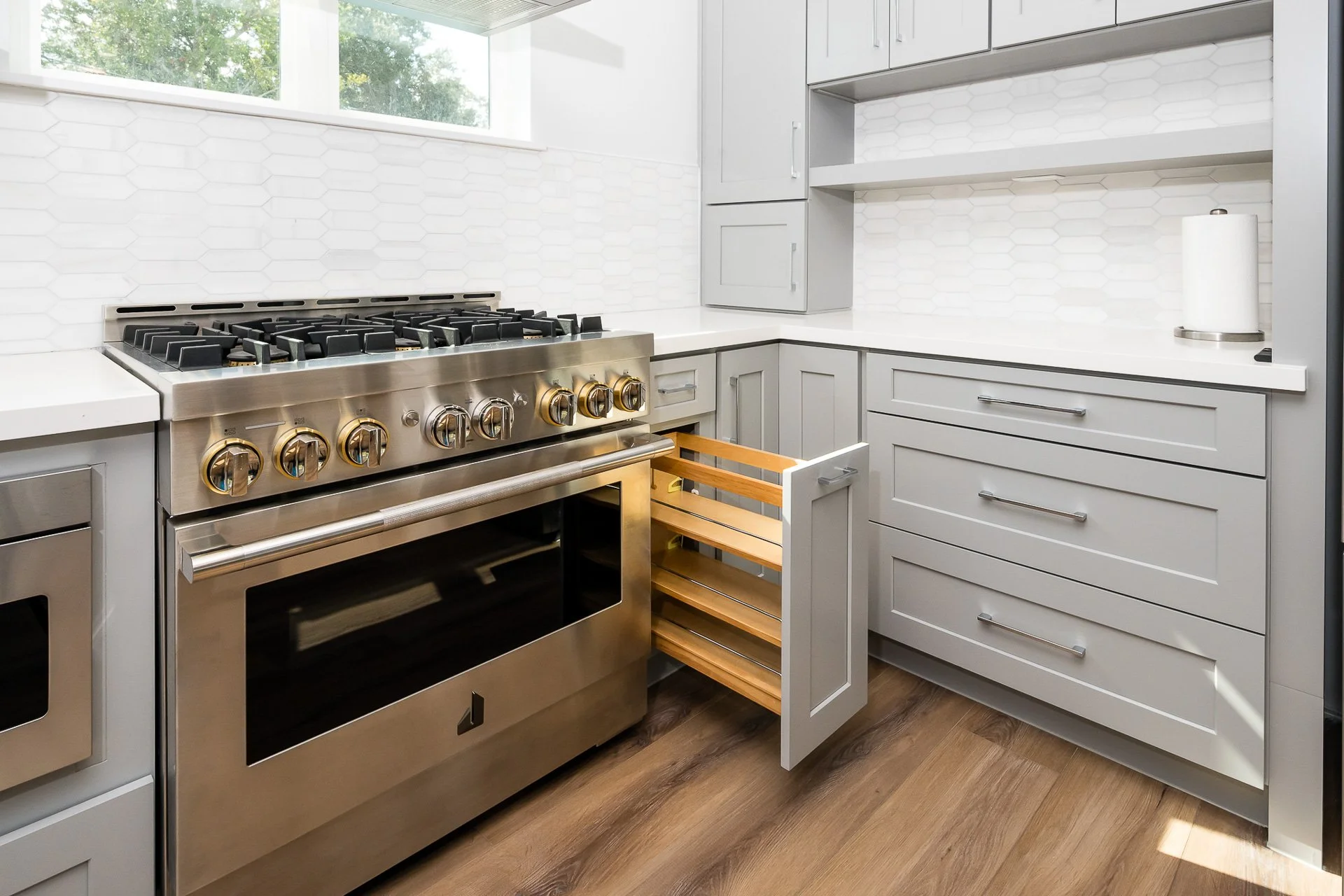
Top 6 kitchen organizers we like
The Takeaway
A window behind a range hood isn’t about following a trend or forcing a look. It’s about choosing what makes sense for the home. What works beautifully in one home may not be right in another.
In this project, the kitchen’s role, the exterior views, and thoughtful detailing all pointed toward this solution. When design decisions are based on real use and careful planning, unconventional choices often become the most successful ones.
The goal isn’t to follow design rules blindly or avoid ideas because they’re debated online. The goal is to choose what truly works for the home, the space, and the people who will use it.