

Building a home, adding on, or tackling a major renovation is one of the largest financial commitments most families will ever make. Naturally, many homeowners start looking for ways to reduce costs and stay in control of the process. In some cases, that brings up the question
Do I really need a general contractor? Or can I manage the project myself?
With online resources, Facebook groups, and easy access to subcontractors, acting as your own GC can seem like a practical way to stay in control and save money. In Texas, general contractors are not licensed by the state, which means homeowners can legally coordinate trades themselves. But what looks straightforward on paper becomes far more complex once construction begins.
Why Homeowners Consider Being Their Own GC
Most homeowners who explore this option are thoughtful and intentional. Common reasons include:
Wanting more control over decisions
Believing a GC is simply a middleman
Hoping to reduce overall cost
Feeling comfortable managing projects
Having access to subcontractors through referrals
On the surface, it makes sense. You call trades, schedule work, order materials, and move through the project step by step.
The challenge is that construction is not linear. Every phase affects the next, and small missteps can ripple through the entire build.
What a General Contractor Actually Does
A professional GC is typically responsible for the following:
Developing construction sequencing
Reviewing plans for conflicts and buildability
Coordinating inspections and approvals
Managing code compliance
Confirming material compatibility
Tracking budgets and allowances
Managing change orders
Carrying insurance and liability
Overseeing quality control
Handling warranty issues
A GC’s real value isn’t in hiring trades. It’s in managing risk.
What Experience Allows a Professional GC to See (and Prevent)
Many homeowners who consider acting as their own GC do so because construction can appear straightforward from the outside. When you haven’t worked inside the process, it’s easy to assume it’s mostly scheduling trades and ordering materials. In reality, construction adds another layer that isn’t obvious at first: pattern recognition. An experienced GC doesn’t just react to what’s in front of them — they recognize issues before they become visible.
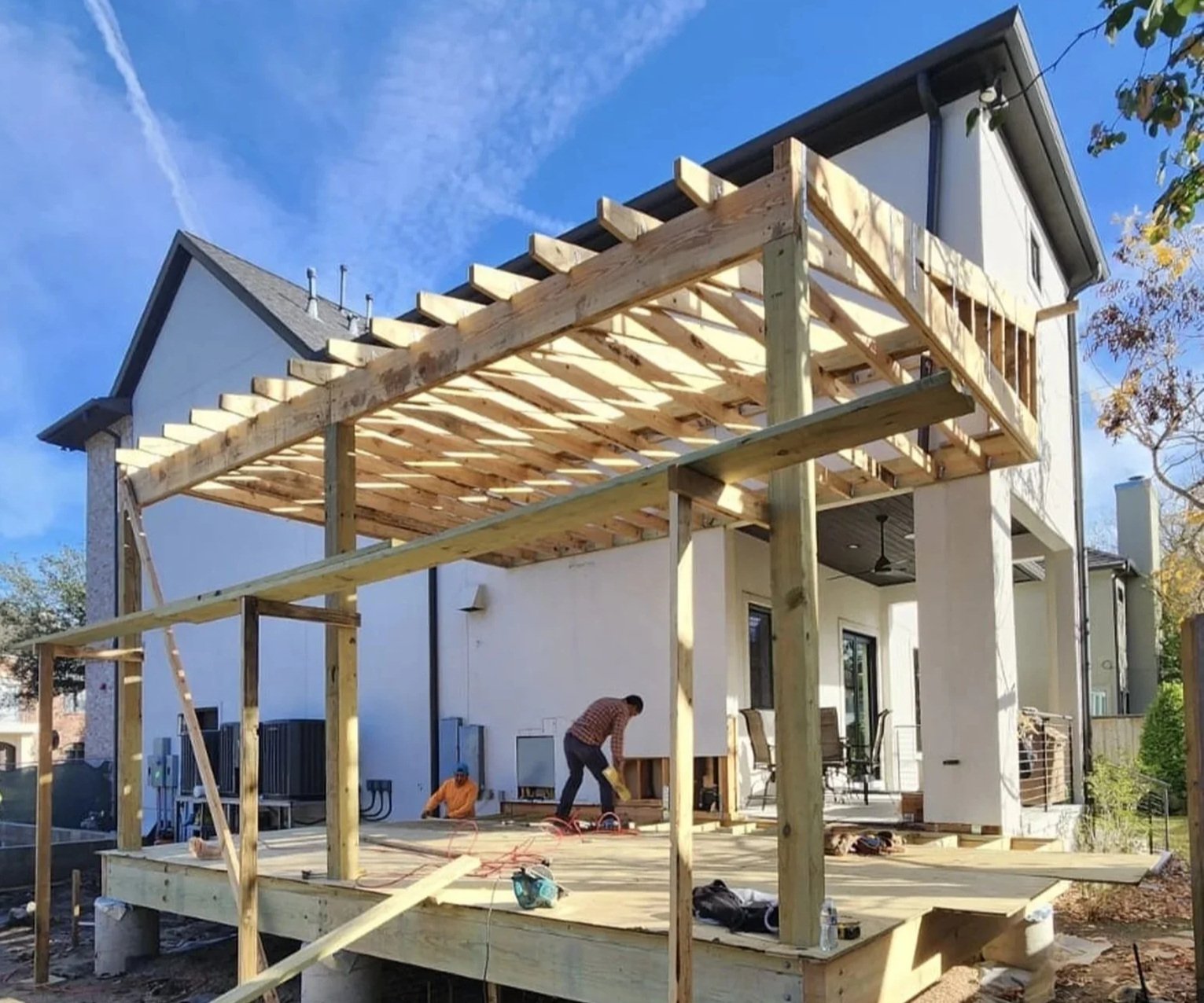
Why Is Your House Made Out of Sticks and Paper?
A seasoned builder can often look at plans and immediately notice:
1. Framing and mechanical conflicts — wall framing that will clash with duct runs, plumbing lines, or structural elements.
2. Ceiling height limitations — spaces that won’t accommodate certain lighting, ceiling details, or HVAC layouts.
3. Window and door risk points — placements that increase the chance of water intrusion or complicated flashing conditions.
4. Structural sequencing challenges — areas that require special order-of-operations to build correctly.
5. Inefficient design decisions — layouts that look good on paper but are expensive or difficult to execute in real life.
Someone new to managing construction may not realize there’s a problem until a trade is already on site — or after work has already been completed and needs correction. At that point, the options are simple: live with the compromise, pay to redo work, or redesign on the fly.
Why Subcontractor Relationships Matter
Another major difference between working with a professional GC and managing a project yourself is subcontractor accountability.
Experienced builders work with many of the same subcontractors year after year. Those long-term relationships encourage better workmanship, faster responses, and follow-through when issues arise.
For a one-time homeowner, leverage is limited. If a subcontractor underbids and later realizes the job isn’t as profitable, they may walk away. A low price can look appealing upfront, but without accountability behind it, that price often carries higher risk.
Replacing a subcontractor mid-project is rarely simple. New trades often need time to review existing work, identify problems, and determine what they’re willing to take responsibility for. This can create delays, added mobilization costs, and higher pricing to finish someone else’s partially completed work.
An experienced GC isn’t just hiring a subcontractor. They’re selecting a team.
How to Achieve Those Same Goals While Working With a Professional GC
At the core, homeowners want to feel informed, involved, and confident in how their project is being built.
You don’t have to manage the project yourself to achieve those outcomes.
Want more control? A good GC involves you in major decisions and explains options clearly.
Think a GC is just a middleman? A professional GC coordinates sequencing, catches conflicts, and carries responsibility for how everything fits together.
Trying to reduce costs? True savings usually come from preventing mistakes, not eliminating coordination.
Comfortable managing projects? You can stay involved through regular updates and budget reviews while the GC handles daily logistics.
The goal isn’t to give up control.
The goal is to share control with someone whose full-time job is protecting your project.
Finishes & Ordering Materials
A custom home involves hundreds of individual materials and components — flooring, cabinetry, hardware, lighting, plumbing fixtures, appliances, trim profiles, waterproofing systems, membranes, insulation types, and more.
Each item requires correct quantities, lead-time tracking, and coordination with the construction sequence. A single shortage or backorder can pause work and create schedule ripple effects.
Professional teams plan for waste and overage, track long-lead items, and monitor availability. Many potential issues are resolved before they ever reach the jobsite.

Houston Custom Home Costs Explained: Build Prices, Allowances and What to Expect
When you’re handling everything yourself, the volume alone becomes difficult to manage — even for organized homeowners.
Tip: If you plan to be your own GC, one of the smartest steps is working with an architect or designer who provides construction-phase support beyond drawings. While this doesn’t replace a GC, it can reduce risk compared to managing everything entirely on your own.
Making Project Decisions Alone Gets Risky
Many projects start with clear intentions. But once construction begins — and especially with constant inspiration from social media and design trends — it’s easy to start second-guessing earlier decisions.
On the surface, changes can look minor. Move a window a few inches. Shift a wall slightly. Swap a fixture. But in construction, very few changes are truly small.
Each change can trigger revised drawings, new material orders, canceled or returned products, additional labor, and schedule delays. What looks like a simple adjustment can quickly turn into thousands of dollars and weeks of lost time.
When an experienced professional is managing the process, they help you evaluate whether a change truly adds value or whether it creates unnecessary cost and disruption. They can also explain downstream impacts and help keep decisions aligned with the overall design, budget, and timeline.
Without that guidance, homeowners often don’t have a clear way to judge which changes are low-impact and which ones create major ripple effects. As a result, changes happen more easily — and the cumulative effect on time and money can be significant. This is one of the main reasons the “savings” of acting as your own GC are often overestimated.
Other Risks Most Homeowners Don’t Anticipate
When you act as your own GC, there is no single party responsible for the entire project.
Subcontractors are responsible only for their scope — not for how their work interacts with others.
This means the homeowner becomes responsible for:
Jobsite safety
Injuries or damages
Schedule coordination
Resolving disputes
Warranty gaps
When you act as your own GC, you also become your own safety net.
When Acting as Your Own GC Can Make Sense
There are limited scenarios where this approach may be reasonable:
Very small projects
Extremely simple scopes
Homeowners with deep construction experience
Even then, it requires significant time, availability, and tolerance for risk.
Bottom Line: Do You Need a General Contractor?
Acting as your own GC isn’t about whether it’s allowed.
It’s about whether you want to personally carry the coordination, financial, scheduling, and liability risk of a complex construction project.
For most homeowners, partnering with an experienced general contractor isn’t about giving up control — it’s about gaining protection.

Thinking about managing your own construction project? While acting as your own GC can seem like a way to save money and stay in control, construction is rarely as simple as it appears. Learn what a general contractor really does, why experience matters, and how professional oversight helps prevent costly mistakes.